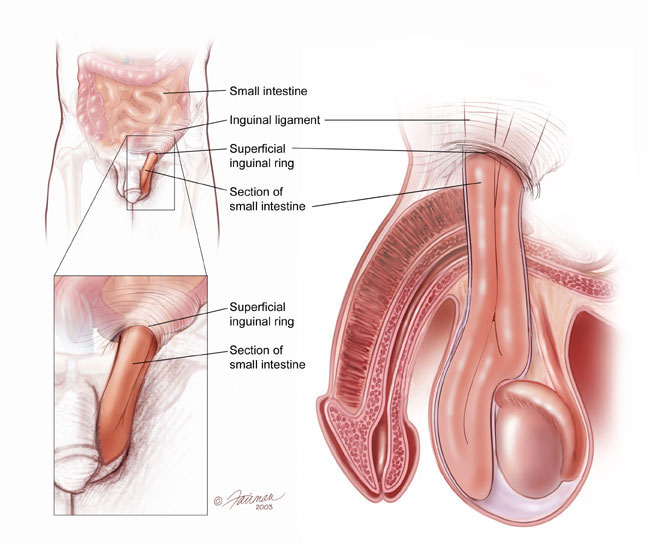
The abdomen is surrounded by numerous muscles to keep the stomach, small intestine, and colon where they belong, but if one of these organs starts to slip though a weakness or a hole in the muscles, it's called a hernia.
Hernias by themselves may be asymptomatic (produce no symptoms), but nearly all have a potential risk of having their blood supply cut off (becoming strangulated). If the blood supply is cut off at the hernia opening in the abdominal wall, it becomes a medical and surgical emergency as the tissue needs oxygen which is transported by the blood supply.
By far the most common hernias (up to 75% of all abdominal hernias) are the so-called inguinal hernias
-->
What cause hernia?
Mainly 2 factors play in causing an inguinal hernia:-
1. Weakness of the abdominal muscles and
2. Increased abdominal pressure which forces the content out the normal abdominal musculature.
Weakness of the abdominal musculature may be
a. CONGENITAL WEAKNESS
i. Persistence of processus vaginalis.
ii. Patent canal of Nuck in female.
b. ACQUIRED WEAKNESS
i. Excessive fat in the abdomen causes weakness of the abdominal musculature. Fat separates muscle fibers and thus causes weakness.
ii. Muscle weakness may follow repeated pregnancy.
iii. Surgical incisions may lead to division of nerve fibres and thus causes muscle weakness.
iv. Incisional hernia develops through weakened abdominal muscle following a previous operation.
Increased abdominal pressure e.g.
i. Whooping cough in children.
ii. Chronic cough in bronchitis,tuberculosis etc.
iii. Bladder neck obstruction or urethral stricture.
iv. Enlarged prostate causing dysuria.
v. Powerful muscular effort or straining during lifting heavy weight.
vi. Vomiting.
vii. Repeated pregnancy.
viii. Constipation
Important Local examinations
Impulse on coughing The patient is asked to turn his face away from the clinician and to cough. This is done to avoid the salivary shower from the patient. Look carefully at the superficial inguinal ring. If a swelling already exists, it will expand during coughing as more abdominal contents will be driven out into the hernia sac due to increased abdominal tension (expansile cough impulse). If a swelling was not present a momentary bulge may be seen synchronously with the act of coughing. Presence of expansile cough impulse is almost diagnostic of a hernia, but absence of this sign does not exclude a diagnosis of hernia. If the neck of the sac is blocked by adhesions additional viscera will not get access into the sac during coughing.
Position of the penis
This is only important in case of inguinal hernia. A large hernia in the scrotum will push the penis to the other side.
TYPES OF INGUINAL HERNIA
ANATOMICAL TYPES
Three types of classification can be made under this heading.
According to the extent of the hernia it can be
1. Bubonocele: - When the hernia does not come out of the superficial inguinal ring.
2. An incomplete hernia: - When it comes out through the superficial inguinal ring but fails to reach the
bottom of the scrotum.
3. A complete hernia: - When it reaches the bottom of the scrotum.
According to its site of exit it can be either
1. An oblique (indirect) hernia: - When hernia comes out through the deep inguinal ring i.e. lateral to the inferior epigastric artery.
2. A direct hernia: - When it comes out through the Hesselbach’s triangle which is bounded medilly by the lateral border of the rectus abdominis , laterally by the the inferior epigastric artery and below by the inguinal ligament.That means the neck of the sac lies medial to the inferior epigastric artery.
According to the contents of the hernia, a hernia may be either
1. An enterocele: - When it contains the intestine(enteron).
2. An epiplocele or omentocele: - When it contains omentum
3. A cystocele
Signs and symptoms of inguinal hernia

At first, an inguinal hernia either may not cause any symptoms or may cause only a feeling of heaviness or pressure in the groin. Symptoms are most likely to appear after standing for long Periods, or when you engage in activities that increase pressure inside the abdomen, such as heavy lifting, persistent coughing or straining while urinating or moving the bowels.
As the hernia grows, it eventually causes an abnormal bulge under the skin near the groin. This bulge may become increasingly more uncomfortable or tender to the touch. As the hernia increases in size, a portion of herniated intestine may become trapped and unable to slide back into the abdomen. If this happens, there is a danger that the trapped intestine may twist and die because its blood supply is cut off. This causes severe pain and requires immediate treatment. If the hernia is obstructing the lumen of the bowel, cardinal symptoms of intestinal obstruction will appear. These are colicky pain in abdomen, vomiting, abdominal distension and absolute constipation.
The causes of hernia must be enquired into. Persistent coughing of whooping cough or chronic bronchitis,constipation,dysuria due to benign enlargement of prostate or stricture urethra may show may show other symptoms which the patient deliberately do not mention considering them irrelevant. Ask about the past history also. Whether the patient had any operation or not? Many patients give a previous history of hernia repair on the same side(recurrent hernia) or on the opposite side(right sided hernia generally precedes that of the left side).
How Inguinal hernia is diagnosed?
Hernias are usually easy to diagnose on physical examination. Typically, a hernia sac with its contents enlarges and transmits a palpable impulse when the patient strains or coughs. Hernias, undetectable by physical examination, can sometimes be demonstrated using ultrasound, CT scan (computerized tomography), or MRI (nuclear magnetic resonance imaging). None of these tests are as sensitive as physical examination. The most sensitive method of diagnosing a hernia is a diagnostic laparoscopy. This procedure, done under general anesthesia, utilizes a scope placed into the abdominal cavity to directly view the abdominal wall.
TREATMENT OF INGUINAL HERNIA
Operation is undoubtedly the treatment of choice in a case of inguinal hernia. A hernia is a mechanical defect that the body cannot repair. Since the defect in the abdominal wall is a defect in the connective tissue of the abdomen (called fascia), strengthening the abdominal wall musculature with exercise does not repair the hernia. In patients who are at high risk for surgery sometimes a trus or support is used to minimize the symptoms of the hernia. These devices are not curative but only attempt to control symptoms in patients that cannot have their hernias fixed.
OPERATIVE TREATMENT
Three types of operation are usually performed for inguinal hernia-
1. Herniotomy
In this operation the neck of the sac is transfixed and legated and then the hernia sac is excised. No repair of the inguinal canal is performed. It is indicated –
(a) In infants and children in whom there is a preformed sac.
(b) In case of young adults with very good inguinal musculature.
2. Herniorrhaphy
It consists of herniotomy+repair of the posterior wall of the inguinal canal by apposing the conjoined tendon to the inguinal ligament. The suture material which is used for such repair is usually non absorbable material e.g.proline or silk. The repair is usually done behind th spermatic cord which is known as Bassini’s operation.
3. Hernioplasty
This means herniotomy + reinforced repair of the posterior wall of the inguinal canal by filling the gap between the conjoined tendon and inguinal ligament by autogenous material or by heterogenous material.
LAPAROSCOPIC INGUINAL HERNIA REPAIR
Laparoscopic hernia repair is similar to other laparoscopic procedures. General anesthesia is given, and a small cut (incision) is made in or just below the navel. The abdomen is inflated with air so that the surgeon can see the abdominal organs.
A thin, lighted scope called a laparoscope is inserted through the incision. The instruments to repair the hernia are inserted through other small incisions in the lower abdomen. Mesh is then placed over the defect to reinforce the abdominal wall.
There are many things to consider when deciding if you should have inguinal hernia repair surgery, such as whether your hernia is incarcerated or strangulated and whether you have other conditions that need to be addressed before hernia repair surgery is appropriate.
Complications of Inguinal hernia
An untreated hernia may be complicated by:
- Inflammation
- Irreducibility
- Obstruction of any lumen, such as bowel obstruction in intestinal hernias
- Strangulation : A strangulated hernia is a serious condition and requires immediate medical attention.
- Hydrocele of the hernial sac
- Haemorrhage
- Autoimmune problems
Incarceration, which is where it cannot be reduced or pushed back into place, at least not without very much external effort
HOMOEOPATHIC MANAGEMENT
Homeopathy works well in chronic complaints and tumours. Lots of patients come for Homeopathy treatment for hernia fearing surgery. In fact, hernia is not at all a disease; it is just like a tear which surely needs to be stitched. More the tear, more will be the bulge and there will be more chances for strangulation and pain. But it is better to opt for surgery to avoid complications. Homeopathy can reduce the pain, discomfort, complication and recurrence.
Regarding management, hernia in the initial stages can be managed well with care (restrictions) and homeopathic medicines. Any way cure is impossible.
Homeopathic medicine commonly used for treating hernia are Arnica, Causticum, Cascara, Cocculus, Colocynthis, Lycopodium, Mag carb, Nitric acid, Nux vom, Rhus tox, Silicea, Sulphur, Veratrum album, etc.
Repertory to inguinal hernia
KENT’S REPERTORY
ABDOMEN, HERNIA,.Inguinal: Æsc., all-c., alum., am-c., apis., asar., aur., berb., calc-ars., calc., carb-an., carb-v., cocc., coff., dig., ip., lach., Lyc., mag-c., mill., mur-ac., nit-ac., Nux-v., op., petr., phos., prun-s., psor., rhus-t., sars., sil., spig., staph., sul-ac., sulph., ter., thu., verat., zinc.
strangulated : Acon., all-c., alum., ars., Bell., carb-v., cocc., coff., dig., ip., lach.,
mill., Nux-v., Op., plb., rhus-t., sul-ac., sulph., tab., verat.
painful : Alum., cic., cocc., sil.
children, in : Aur., lyc., nit-ac., nux-v.
right : Aur., lyc.
left : Nux-v.
inflammation : Acon., nux-v., op., sulph.
with vomiting : Acon., ars., bell., lach., tab., verat.
sensitive : Bell., Lach., nux-v., sil.
Umbilical : Calc., lach., nux-m., Nux-v., op.
Homeopathic medicines
NUX VOMICA
Sudden violent pain in hernial region. Drawing, tearing and spasmodic constriction in the abdomen , with nausea , vomiting of sour mucus. Constipation with ineffectual urging to stool. Slow protrusion in aged people, with squeezing pain in hernia region, fullness in abdomen, periodical nausea.Sour taste, and nausea in the morning, after eating. Weight and pain in stomach; worse, eating, some time after. Flatulence and pyrosis. Sour, bitter eructations.
OPIUM
Incarcerated and inguinal herniae. Soporous condition with red face , distended abdomen with flatus. Antiperistaltic motion , belching and vomiting , bowels absolutely closed with urging to stool and urine. Stomach.--Vomiting, with colic and convulsions. Fecal vomiting. Incarcerated hernia. Hungry; no desire to eat.Abdomen is hard and bloated. Obstinate constipation; no desire to go to stool. Round, hard, black balls. Feces protrude and recede . Spasmodic retention of feces in small intestines. Stools involuntary, black, offensive, frothy
SULPHURIC ACID
Colic with sensation as if hernia would protrude. Inguinal hernia, incarcerated hernia in old people , coming on in a very gradual manner. Pinched, constricted feeling in hernia. Sensation of fullness in abdomen periodical nausea and constipation. Hernia not very sensitive. Hernia on left side of persons of a melancholy phlegmatic temperament. Periodical transient tearing pains, constant nausea, belching of sweet, salty or bitter fluid, finally vomiting. Gradual accumulation of flatus.
4.LYCOPODIUM
Best adapted to persons intellectually keen, but of weak, muscular power. Dyspepsia due to farinaceous and fermentable food, cabbage, beans, etc. Excessive hunger. Aversion to bread, etc. Desire for sweet things. Food tastes sour. Sour eructations. Great weakness of digestion. Bulimia, with much bloating. After eating, pressure in stomach, with
bitter taste in mouth. Eating ever so little creates fullness. Cannot eat oysters. Rolling of flatulence (Chin; Carb). Wakes at night feeling hungry. Hiccough. Incomplete burning eructations rise only to pharynx there burn for hours. Likes to take food and drink hot. Sinking sensation; worse night.Immediately after a light meal, abdomen is bloated, full. Constant sense of fermentation in abdomen, like yeast working; upper left side.. Pain shooting across lower abdomen from right to left. Right sided inguinal hernia.Crural hernia in women. Lacerating , stiching pains. Distension of abdomen with rumbling of gas.Hot patient with desire for warm food and warm drinks.Easy satiety.Ineffectual urging.Stool hard ,difficult,smalland incomplete.
COCCULUS INDICUS
Abdomen is distended, with wind, and feeling as if full of sharp stones when moving; better, lying on one side or the other. Pain in abdominal ring, as if something were forced through. Abdominal muscles weak; it seems as if a hernia would take place. Nausea from riding in cars, boat, etc, or looking at boat in motion; worse on becoming cold or taking cold. Nausea, with faintness and vomiting. Aversion to food, drink, tobacco. Metallic taste. Paralysis of muscles preventing deglutition. Dryness of œsophagus. Seasickness (Resorcin. 1x). Cramp, in stomach during and after meal. Hiccough and spasmodic yawning. Loss of appetite. Desire for cold drinks, especially beer. Sensation in stomach as if one had been a long time without food until hunger was gone. Smell of food disgusts .
CALCAREA CARBONICA
Persons of scrofulous type, who take cold easily, with increased mucous secretions, children who grow fat, are large-bellied, with large head, pale skin, chalky look, the so-called leuco-phlegmatic temperament; affections caused by working in water. Great sensitiveness to cold; partial sweats. Children crave eggs and eat dirt and other indigestible things; are prone to diarrhœa. Calcarea patient is fat, fair, flabby and perspiring and cold, damp and sour Aversion to meat, boiled things; craving for indigestible things-chalk, coal, pencils; also for eggs, salt and sweets. Milk disagrees. Frequent sour eructations; sour vomiting. Dislike of fat. Loss of appetite when overworked. Heartburn and loud belching. Cramps in stomach; worse, pressure, cold water. Ravenous hunger. Swelling over pit of stomach, like a saucer turned bottom up. Repugnance to hot food. Pain in epigastric region to touch. Thirst; longing for cold drinks. Aggravation while eating. Hyperchlorhydria
Abdomen sensitive to slightest pressure. Cutting in abdomen; swollen abdomen. Incarcerated flatulence. Inguinal and mesenteric glands swollen and painful. Cannot bear tight clothing around the waist. Distention with hardness. Increase of fat in abdomen. Umbilical hernia. Trembling; weakness, as if sprained. Crawling and constriction in rectum. Stool large and hard (Bry); whitish, watery, sour. Constipation; stool at first hard, then pasty, then liquid.
SILICEA
Disgust for meat and warm food. On swallowing food, it easily gets into posterior nares. Want of appetite; thirst excessive. Sour eructations after eating. Pit of stomach painful to pressure. Vomiting after drinking .Pain or painful cold feeling in abdomen, better external heat. Hard, bloated abdomen. Colic; cutting pain, with constipation; yellow hands and blue nails. Much rumbling in bowels. Inguinal glands swollen and painful. Rectum feels paralyzed. Stool comes down with difficulty; when partly expelled, recedes again. Great straining; rectum stings; closes upon stool. Feces remain a long time in rectum. Constipation always before and during menses; with irritable sphincter ani.Silica patient is cold, chilly, hugs the fire, wants plenty warm clothing, hates drafts, hands and feet cold, worse in winter. Lack of vital heat. Prostration of mind and body. Great sensitiveness to taking cold. Intolerance of alcoholic stimulant.
ZINCUM MET
Painful pressing in left groin asif hernia would occur.Drawing pain in left inguinal region while sitting.Hiccough, nausea, vomiting of bitter mucus. Burning in stomach, heartburn from sweet things. Cannot stand smallest quantity of wine. Ravenous hunger about 11 am. Great greediness when eating; cannot eat fast enough. Atonic dyspepsia, feeling as if stomach were collapsed.Pain in abdomen after a light meal. Pain in spot beneath navel. Gurgling and griping; distended. Flatulent colic, with retraction of abdomen.Hard, small, constipated stool.
PLUMBUM MET
Right sided strangulated hernia.Severe pain with continual vomiting of feculent matter. Contraction in œsophagus and stomach; pressure and tightness. Gastralgia. Constant vomiting. Solids cannot be swallowed.Excessive colic in abdomen, radiating to all parts of body. Abdominal wall feels drawn by a string to spine. Pain causes desire to stretch. Intussusception. Abdomen retracted. Obstructed flatus, with intense colic. Colic alternates with delirium and pain in atrophied limbs.Constipation; stools hard, lumpy, black with urging and spasm of anus. Obstructed evacuation from impaction of feces. Neuralgia of rectum. Anus drawn up with constriction. The great drug for general sclerotic conditions. The blood, alimentary and nervous systems are the special seats of action of Plumbum. Constrictive sensation in internal organs.
NITRIC ACID
Umbilical and inguinal hernia in children.Pain in abdomen when walking;must bend forward.Stinging soreness when touched.Great hunger, with sweetish taste. Longing for indigestible things-chalk, earth, etc. Pain in cardiac orifice. Dyspepsia with excess of oxalic acid, uric acid and phosphates in urine and great mental depression. Loves fat and salt.Great straining, but little passes, Rectum feels torn. Bowels constipated, with fissures in rectum. Tearing pains during stools. Violent cutting pains after stools, lasting for hours. Hæmorrhages from bowels, profuse, bright. Hæmorrhoids bleed easily. Diarrhœa, slimy and offensive. After stools, irritable and exhausted. Colic relieved from tightening clothes.
LOBELIA INFLATE
Incarcerated hernia. Languor, relaxation of muscles, nausea, vomiting and dyspepsia are the general indications that point to the use of this remedy, in asthma and gastric affections. Best adapted to light complexioned fleshy people. Acidity, flatulence, shortness of breath after eating. Heartburn with profuse flow of saliva. Extreme nausea and vomiting. Morning sickness. Faintness and weakness at epigastrium. Profuse salivation, with good appetite. Profuse sweat and prostration
BELLADONNA
Strangulated hernia.Loss of appetite. Averse to meat and milk. Spasmodic pain in epigastrium. Constriction; pain runs to spine. Nausea and vomiting. Great thirst for cold water. Spasms of stomach. Empty retching. Abhorrence of liquids. Spasmodic hiccough. Dread of drinking. Uncontrollable vomiting.Abdomen is distended, hot. Transverse colon protrudes like a pad. Tender, swollen. Pain as if clutched by a hand; worse, jar, pressure. Cutting pain across; stitches in left side of abdomen, when coughing, sneezing, or touching it. Extreme sensitiveness to touch, bed-clothes, etc .Stools is thin, green, dysenteric; in lumps like chalk. Shuddering during stool. Stinging pain in rectum; spasmodic stricture.
VERATRUM ALBUM
Incarcerated hernia,not inflamed;cough impulse present,anti peristaltic action;great thirst,nausea,hiccogh and cold sweat.Voracious appetite. Thirst for cold water, but is vomited as soon as swallowed. Averse to warm food. Hiccough. Copious vomiting and nausea; aggravated by drinking and least motion. Craves fruit, juicy and cold things, ice, salt. Anguish in pit of stomach. Great weakness after vomiting. Gastric irritability with chronic vomiting of food.
Sinking and empty feeling in abdomen. Cold feeling in stomach and abdomen. Pain in abdomen preceding stool. Cramps, knotting abdomen and legs.
PREVENTION
Indirect hernias in children cannot be prevented. To reduce the risk of inguinal hernia as an
adult, you can:
v Exercise regularly to strengthen abdominal muscles.
v Avoid strain which can increase the abdominal pressure such as
Ø Weight lifting
Ø Chronic cough.
Ø Passing urine with great difficulty (enlarged prostate)
Ø Straining at stool due to constipation, piles, fissure, etc.
Ø Gaining weight
Ø Taking full and heavy meal
v Give support to the part
Ø With hand while coughing or passing stool or urine to avoid increase in size
Truss / bandage / padding / belt can be used as a supporter
-->
Images from:
physiosupplies.com.au
urologyhealth.org
medicaltourismco.com
If you like this article share it and hit +1 button